
The Leader Who Stopped Fighting
4/14/2026
She had always been taught to use her voice fully, not cautiously. Growing up, strength didn’t show up in just one way. Sometimes it was bold and unmistakable, taking up space in a room without hesitation. Other times, it was quiet but unwavering, offering stability and grounding to everyone around it. No matter how it appeared, one thing was always true: strength didn’t ask for permission.
So when she stepped into leadership, she carried that understanding with her. She spoke up when something felt off, pushed when systems resisted, and challenged what didn’t align with her values. For a long time, that approach served her well. It helped her earn trust, create change, and establish her place at the table. But eventually, something began to shift.
As her career progressed and her influence grew, she found herself in rooms where she no longer had to fight to be heard. People were listening. Her voice carried weight. And yet, she noticed something unsettling; she was still showing up as if she had to prove her worth, still pushing with the same intensity that had once been necessary. That realization forced her to pause and ask a difficult question: if no one is holding the door closed anymore, why am I still pushing against it?
That moment became a turning point. She began to understand that leadership is not about holding onto a single way of showing up. It is not about being “the fighter” or “the challenger” in every situation. Instead, leadership is a series of choices, shaped by context, people, and purpose. In some moments, leadership requires conviction and directness. In others, it calls for curiosity, patience, or the ability to bring others along. The real work lies in knowing the difference and having the self-awareness to adjust accordingly.
Long before she encountered this realization in the workplace, she had already been learning these lessons in a very different environment, a basketball court. As a player who didn’t rely on size or strength, she quickly understood that her value came from seeing the game differently. She studied not just her role, but every role. She paid attention to how each position contributed to the overall strategy and how individual decisions influenced the outcome of the game. That perspective allowed her to connect the dots for others, to guide teammates, and to elevate the performance of the entire team.
That early experience shaped how she approaches leadership today. She doesn’t see leadership as optimizing individual performance alone, but as understanding and improving the system as a whole. When leaders take the time to see how people, processes, and decisions intersect, they become far more effective in creating meaningful and lasting impact.
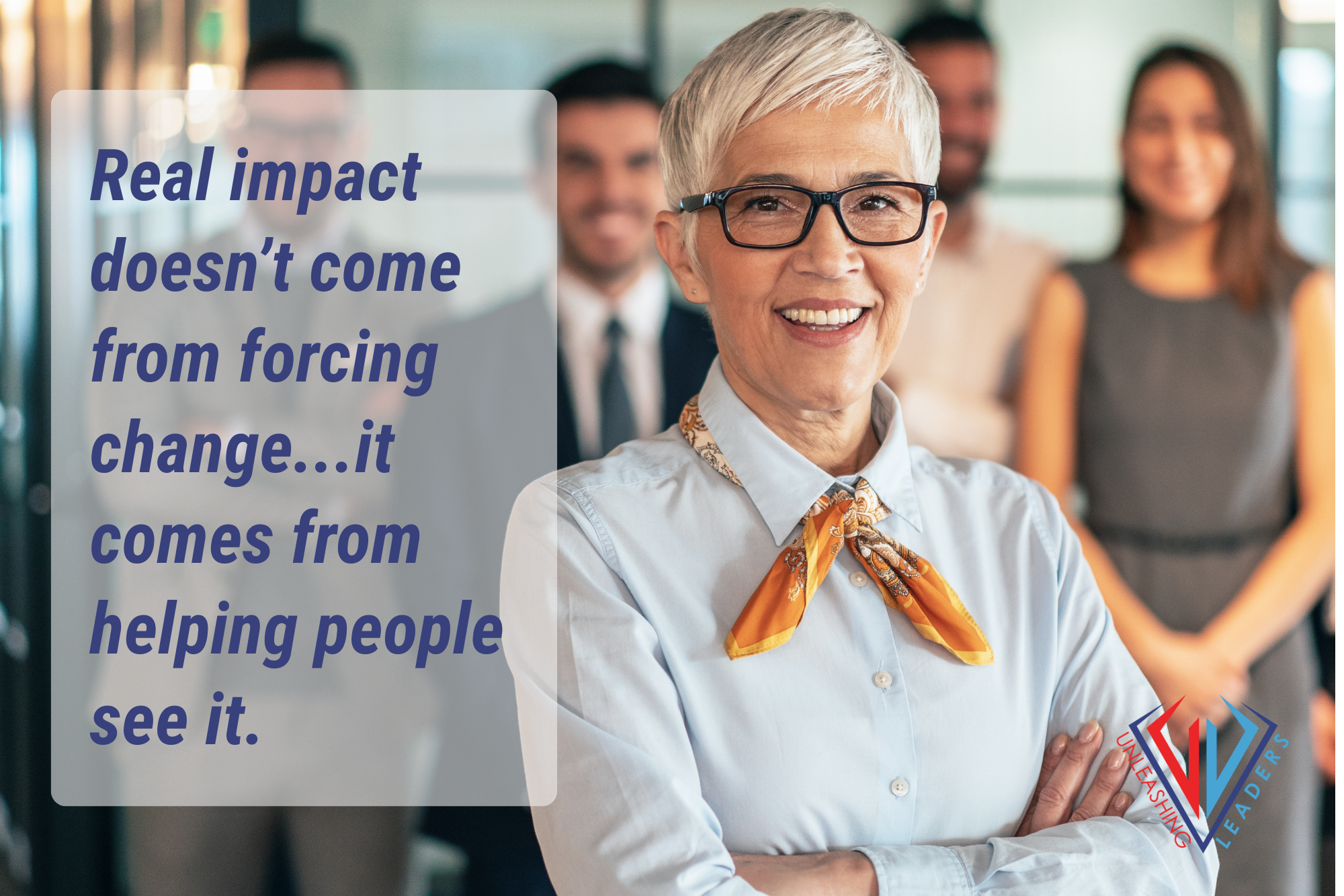
Over time, her approach evolved from pushing for change to designing it. Rather than focusing solely on making her voice heard, she began focusing on helping others see what she could see. She learned that real influence doesn’t come from insisting that something is the right thing to do. It comes from clearly articulating where a team is today, where it has the potential to go, and why closing that gap matters, not just for individuals, but for the organization as a whole.
Just as importantly, she recognized that understanding is only the beginning. True leadership involves helping people translate insight into action. It requires creating space for others to practice new behaviors, test new approaches, and build confidence over time. Bringing people along is not about telling them what to do; it is about walking alongside them until they are capable of doing it themselves.
At its core, her journey reflects a truth that many leaders overlook: leadership is not a destination. It is an ongoing, often messy process of growth, reflection, and adjustment. It requires a deep understanding of who you are, what you value, and how you show up in different moments. Without that foundation, it becomes easy to default to performing leadership rather than living it.
For any leader navigating their own path, the most important work begins internally. It starts with asking honest questions about what feels authentic, where tension exists, and whether that tension is coming from within or from external expectations. The more clarity a leader has about themselves, the more grounded and adaptable they can be in the face of change.
Because ultimately, the goal is not to become a certain type of leader. It is to become a leader who can respond with intention, act with integrity, and create space for others to do the same.
Listen to the full episode to hear the complete story and insights.
Ready to unleash your leadership?
Discover how our large-scale Strategic Planning and Operational Management Services can transform your organization, dive into practical growth with Unleashing Leaders University and get inspired by real stories on The Unleashing Leaders Podcast.